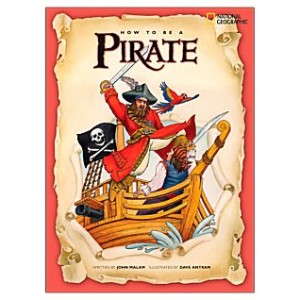
NatGeo: “How to Be” Series
Do you have a child who wants to be a pirate? Or maybe an Egyptian princess? Maybe they are too old for that but are really into learning about the Revolutionary War or ancient Greece?
Reprinted with permission from the St. Louis Post Dispatch Last winter, little Stephanie Bridgeman stood helplessly by as her father built a snowman for her. But Clyde Bridgeman turned to his crippled daughter and said “I promise that I’m going to help you B and next year, you will build a snowman.” He then guided…
In addition to staying on top of the latest research and various modalities that affect our children, NACD also likes to take advantage of cutting edge and current technology in order to provide greater service to our families. NACD is pleased to announce that we have begun utilizing Facebook as a tool to unite the…
The National Association for Child Development is always looking for the best knowledge to further our understanding of developmental disorders and their remediation. Therefore, we are fascinated by the prospects of neuroscience research, but are fully aware of the current limitations. One major area of neuroscience research that has generated a lot of hyped buzz…
A 2012 study of child prodigies conducted by Joanne Ruthsatz and Jourdan B. Urbach found that all the children studied tested in the 99th percentile for working memory. Each of the child prodigies tested at what was considered a moderately elevated intelligence and exhibited high scores relative to their attention to detail. But the most…
Robert J. Doman Jr. TV/Videos and The Preschool Child For over twenty-five years, the National Association for Child Development (NACD) has had the opportunity to serve a large, international caseload of children covering the entire functional spectrum. Our work with innovating ways to accelerate the development of children with profound developmental issues (such as brain…
Lyn Waldeck Four and a half years ago, our family was given the gift of a precious 2-year-old brain-injured child who had previously been a Romanian orphan. Our first prognosis from the medical field was very devastating. “What was done to this child is a tragedy. Now he may never walk, never talk, never see,…