down syndrome: what’s actually possible for your child
Most parents are told what their child with Down syndrome won’t do. For more than 47 years, NACD families have been writing a different story with dramatically different and better outcomes. Outcomes that are the reflection of very different opportunities. Individuals with Down syndrome have the potential to read and do math like their “typical” peers, to be independent, to work at real jobs, to contribute, live on their own, drive, have relationships, and lead long and happy lives. To do well, if really given the opportunity.
Start Your Free Get Started Program
A label need not be a prognosis
If you are here, you have probably heard the standard story: manage your expectations, plan for limits, try not to compare. Be grateful your child can get a session or two of therapy a week and receive special education. The people who deliver that story and provide those “opportunities” mean well, but it describes the failure of the system, not the potential of your child. Perceived limitations have defined “appropriate” opportunities. All of our children grow and develop as a reflection of the opportunities we provide for them. The historic failure of the system has not only limited opportunities; year after year it has confirmed the low expectations of those providing the services and perpetuated the broken system. This need not be the picture of your child’s future. It does not describe your child, and it does not describe what is possible.
Since 1979, NACD has worked with more than 50,000 families with every kind of child, and children with Down syndrome have been central to that work from the beginning. We design individualized, home-based programs built for each whole, unique, specific child. This page explains what we do differently, and why targeted input provided by the right people, your family and caregivers, can refine opportunities and outcomes. Read about the NACD approach
What is Down syndrome?
Down syndrome is a genetic condition in which a child is born with a full or partial extra copy of chromosome 21. There are three subtypes of Down syndrome: Mosaic, which comprises about 1 to 2 percent of the group; Translocation, about 3 to 4 percent; and Trisomy 21, the most common form, comprising about 95 percent of cases. Regardless of the subtype, every child is unique, as are their needs and those of their family.
Our chromosomes affect our bodies through our DNA, as they do with Down syndrome. Our DNA determines physical traits such as eye and hair color, height, and sex, and has some effect on how we grow and develop. How everyone grows, develops, learns, and functions is, however, primarily determined by what happens in our lives: our opportunities. Development responds to input, and the amount and quality of input a child receives every day is something a family needs to control.
The individual’s unique profile is a starting point
Common real strengths we build on
- Strong visual learning and visual memory
- Social warmth and connection with people
- Determination and persistence when engaged
- Responsiveness to routine and daily input
Common challenges we target
- Auditory processing, working memory, and cognition
- Speech clarity and expressive language
- Muscle tone and motor development
- Health and nutrition factors that affect learning
- Targeted educational input and opportunities
A program built for your child, not a category
There is no Down syndrome program in a box, because the profiles and needs are unique to every individual. Every aspect of a specific child’s development and function is unique. Effective targeted input demands an understanding and appreciation of the individual’s strengths, inefficiencies, specific level of function, and needs: the whole child. Being a member of a category, a label, or a class does not define nor determine an individual child’s or adult’s needs.
Individualized programming
There is no Down syndrome program in a box. Your child is evaluated across every aspect of how they function, from self-help skills, behavior, speech and language, and fine and gross motor abilities to all aspects of cognitive function and education. Their program is assembled from a toolbox of over 1,000 techniques to fit the child in front of us: your child, within the context of your family.
Daily frequency, parent-delivered
An hour a week cannot change how a developing brain processes the world. Short, targeted activities done daily at home can. We train and coach you to deliver them. Our programs are dynamic, and with ongoing communication and support from our staff, your program is tweaked and modified on an ongoing basis to keep it as targeted as possible.
The whole child
Development, education, behavior, health, and nutrition are all part of one unique person. Your program addresses all of these together and more, and undergoes a comprehensive assessment and update three times a year.
What your child’s program can address
Every program is assembled from a toolbox of over 1,000 techniques. These are the areas most Down syndrome programs draw from, in whatever mix your child actually needs.
Auditory processing & working memory
The foundation under language, learning, and following directions. Usually the highest-leverage target.
Expressive language & clarity of speech
Daily targeted input for receptive and expressive language, oral motor function, articulation, and communication.
Reading & academics
We teach to strength and remediate weakness. Building on strengths, we develop reading, math, and other academic functions without perceived limitations and with high expectations.
Gross & fine motor development
Addressing fine and gross motor function, coordination, strength, and fitness.
Health & nutrition
The physiological factors that affect energy, attention, and learning, coordinated with your medical team.
Attention, behavior & independence
Practical daily structure, chores, responsibilities, initiative, self-regulation, and other executive functions are all part of producing success and real-world independence.
Bob Doman Discusses Down Syndrome Issues
(Free Seminar)
Three steps, starting free
Testimonials From NACD Clients

Martin Family Testimonial

Kelly Family Testimonial

Acevedo Family Testimonial

Thorup Family Testimonial

Goad Family Testimonial

Gardner Family Testimonial

Simmons Family Testimonial
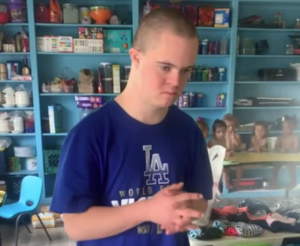
David’s Story, A Family’s Journey
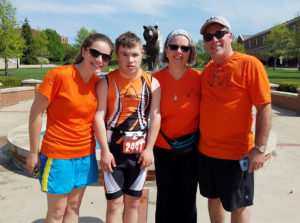
Breaking Down Stereotypes: Gabriel is a Winner!
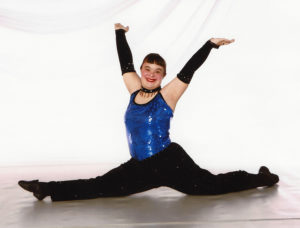

Related Articles for Down Syndrome
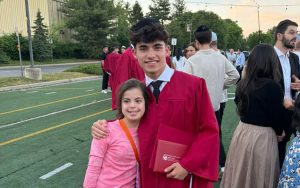
A Gift From Hashem: Growing Up With a Sister With Down Syndrome
Honoring World Down syndrome Day

NACD’s Whole-Child Philosophy: Seeing Beyond the Labels

Utah’s Best Resource for Child Development & Education

Down Syndrome & Cognition

Educational Options 2022

Down Syndrome – A Gift
World Down Syndrome Day 2021: A Vision of What Can Be and Should Be

How Clearly Is Your Child Hearing You?