
Brain Injured

Brain injury program for child
Who We Help · Brain Injuries

brain injury: a program for what comes next

If you have a brain-injured child, you know the challenges ahead are daunting, and you have probably met the pessimism of the medical community. NACD has been designing individualized home programs for brain-injured children and adults since 1979, built around one question: what is the next developmental step, and how do we get there?

Start Your Free Get Started Program
Free application and interview. No obligation.
For Parents

When the standard answers feel too small

If you have a brain-injured child or are working with a brain-injured child, then you are aware that the challenges ahead are daunting. You are also aware that the medical community tends to be very pessimistic about the future. Standard therapies may seem insufficient and too fragmented to make a significant improvement.

NACD can help. Our approach is based on performing a neurodevelopmental assessment that gives information regarding your child’s function in all key areas. Based on the results of this detailed assessment, an individualized NACD program is designed to work on achieving the next developmental step in each of those areas.

The assessment maps your child’s function across:

  • Auditory processing
  • Visual processing
  • Tactile processing
  • Tonal processing
  • Manual competence
  • Mobility
  • Language
  • Academic functioning

The programs are designed to be very efficient and very relevant to your specific child’s needs. Using typical development as the guide, the NACD program seeks to train the brain to move your child forward through each developmental step, drawing on a toolbox of more than 1,000 techniques.

Never Static

A program that keeps up with your child

In order to keep up with your child’s changing status, NACD programs are “works in progress,” constantly being assessed and updated. The brain your child has today is not the brain they will have in three months, and the program moves with them.

Although NACD’s approaches are innovative, they are not static. With an “if it works, we’ll incorporate it” attitude, NACD actively explores new methods to help children. Outcomes are the criteria we use to assess which methods are utilized.

A Real Partnership

You are the expert on your child. We give you everything we have.

NACD views parents as experts on their own children. Throughout this process, parents are trained and supported, and the exchange runs both ways.

What NACD gives you

  • All of the knowledge that NACD has to offer, taught to you step by step
  • Training in how to implement every activity in your child’s program
  • Staff assigned to you, available to answer your questions at any time
  • A program designed for your child and updated as they change

What you give NACD

  • Crucial daily observation nobody else can provide
  • Information that helps us assess and fine-tune your child’s program
  • The unparalleled commitment of a parent to their child
  • The daily implementation that makes the volume of input possible
Our Standard
if it works, we’ll incorporate it.

NACD is interested in outcomes and futures. NACD is proud of its record of helping parents help their children progress, and working hand in hand with families to create a better future for their children.

Testimonials From NACD Clients

Murphy Family Testimonial

The Murphy Family’s experience with NACD has come at three major crossroads in our life. The first was when our ...

Tomar Family Testimonial

“Your son may not survive the night”, doctors told us soon after our son, Baran, our firstborn, was born in ...

Coco the Wonder Boy – Part 2A

by Bob Doman Back in May we introduced you to Coco Manole, the incredible little boy who was developing really ...

Manole Family – A “Discovery” Leads to Success with NACD & Simply Smarter

Years ago, I saw a TV show on Discovery with an organization from England that transformed “typical” children into geniuses ...

Elliot

by Sunette Payne, as told to Iliana Clift Elliot was born with hypoplastic left heart syndrome (HLHS), which means that ...

Trevor Jones

by Natani Jones, as told to Iliana Clift Now what? After a month in ICU and three months in a ...

A Part of All That I Have Met

by Kenneth H. Waldeck I was born to two dedicated parents whose care exceeded just addressing the needs of the ...

Fear No Mountain – Evan Waldeck

By Lyn Waldeck Our story, which by no means is at its end, began in the mountains. To be specific ...

Brain Injury: “Joshua”

Three years ago I was attending a home school convention searching for guidance for our two year old son. After ...

Brain Injury: “Jeff”

In September of 1982 my 20 year old son, Jeff, was in an auto accident sustaining a closed head injury ...
How To Get Started

Three steps, starting free

1 · Free application and interview 2 · Evaluation and your child’s program 3 · Coaching and follow-ups, three times a year
Start Your Free Get Started Program

Related Articles for Brain Injuries

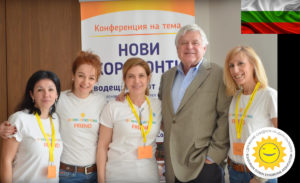
NACD International Outreach – Bulgaria

On March 16th Bob Doman gave three lectures to groups of professionals and parents in Sofia, Bulgaria. The topics of ...

Intensity: Get It – Got It – Good!

by Bob Doman In an effort to help our NACD families and others maximize their efforts and make the most ...

Accelerated: “Jennifer”

Our daughter, Jennifer, was born on December 6, 1980, in San Diego, California at 12:45 a.m., with complications. She had ...

Justin

by Carol Johnson, as told to Iliana Clift When I last wrote about Justin, he was thirteen and going into ...

Twenty Years Later

by Jeannie Cummings When Michael and Mark were born 3 1/2 months prematurely, no one expected they would live through ...

Siblings of NACD Special Needs Children: The Game Where Everyone Wins

by Lyn Waldeck At our recent staff training/brainstorming session last October, it was time to talk about articles for upcoming ...

Maggie’s Story

My husband and I felt like deer in the headlights as we walked into Bob's office for the first time ...

Ally Mae

ALLY MAE has been on an NACD program since she was 10 months old after suffering a traumatic brain injury ...

Coma/Head Injuries: “Camron”

Paul and Ann Stephens As I write this account, it is the day after Thanksgiving, 1996. How far we've come ...

Minimal Brain Dysfunction: “Philip”

Philip could not speak to be understood until he was four years old. At that point there were only a ...
Loading...
Questions

Common questions from parents

An NACD program is a set of daily activities designed specifically for your child after a neurodevelopmental assessment maps their function across auditory, visual, tactile, and tonal processing, manual competence, mobility, language, and academic functioning. The program targets the next developmental step in each area, and you are trained to run it at home with ongoing staff support.
Yes. The families on this page include children injured at birth, born extremely premature, and injured later in accidents. The assessment does not start from how the injury happened. It starts from how your child is functioning now and what the next developmental step is in each area.
Medical stabilization always comes first, and your medical team leads that. Once your child is medically stable, a developmental program can begin, and NACD works with families at every stage after injury. Contact us about your specific situation through the free Get Started interview.
Yes. NACD has worked with brain-injured adults for decades. One of the families on this page came to NACD after their 20-year-old son sustained a closed head injury in an auto accident. The brain remains changeable across the lifespan, and the same assessment-first approach applies.
Your medical team stays your medical team, and medical decisions belong to your family and your physicians. NACD’s role is the developmental program, and we help you coordinate everything your child is receiving into one coherent plan so the pieces stop feeling fragmented.
We cannot promise outcomes, and we won’t. What we can tell you is that a prognosis is a prediction based on averages, that the brain responds to input, and that the families on this page were handed grim predictions too. The next developmental step is always worth working toward, and it is where every NACD program begins.
Constantly. NACD programs are works in progress, assessed and updated as your child changes, with formal re-evaluations three times a year and staff available to you between them. A brain-injured child’s status can change quickly, and the program is built to keep up.
No. NACD works with families across the world. Evaluations happen at evaluation sites and remotely, and your coaching and program support are available wherever you live.
Your NACD Developmentalist works directly with your child and with you, mapping function across all key areas, from sensory processing through mobility, language, and learning. You leave with a full picture of your child and a program of activities with clear instructions, and your assigned staff supports you from day one.
Every child is different, and we do not make promises. What we can say is that input compounds day after day, and progress is measured concretely at follow-up evaluations three times a year, so you always know what is moving and what the program targets next.